
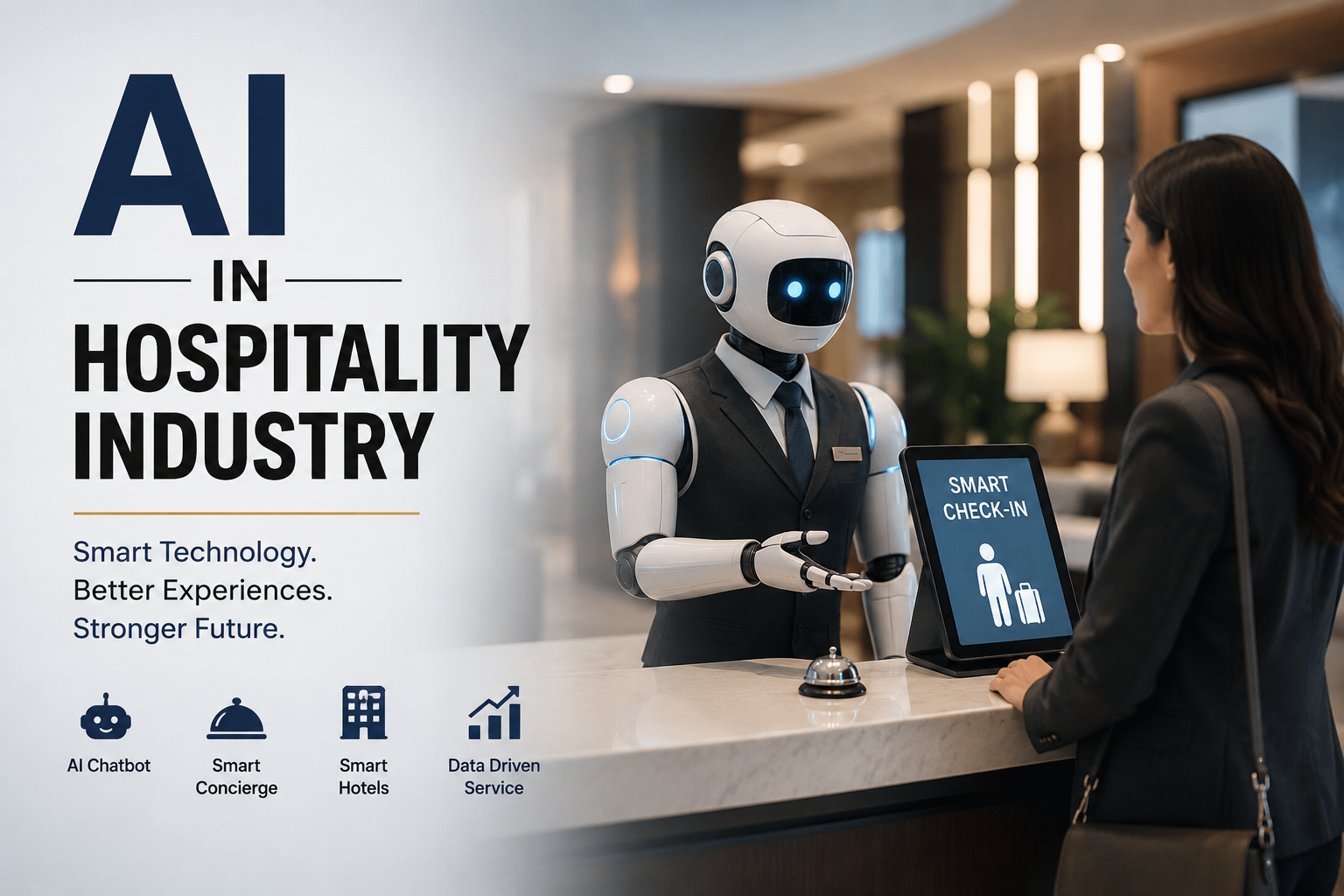
AI in Hospitality Industry: Future of Smart Hotels & Hotel Management
The AI in Hospitality Industry revolution is transforming hotels, resorts, restaurants, and tourism businesses across the world. In 2026, hotels are no longer operating only through traditional systems. Instead, modern hospitality businesses are adopting smart technologies, automation, and artificial intelligence to improve customer experience and operational efficiency.
Today’s travelers expect personalized experiences, fast customer support, smart room technology, and contactless services. Because of these changing expectations, the role of AI in Hospitality Industry has become more important than ever before.
From AI chatbots and voice-controlled rooms to smart hotel automation and data-driven guest services, artificial intelligence is creating a new era of hospitality. The AI in Hospitality Industry is not only helping hotels improve customer satisfaction but also creating exciting career opportunities for students and hospitality professionals.
As the Future of Hospitality Industry becomes more technology-driven, students planning careers in hotel management must understand how AI is shaping modern hospitality. Educational institutions are also adapting to these industry changes by introducing future-ready hospitality education and digital hospitality learning.
Institutes like Ausskill International Hotel School are helping students prepare for the future by combining practical hospitality education with modern industry trends and technology-focused learning.
The rapid growth of AI in Hospitality Industry is changing how hotels operate, how guests experience hospitality, and how students prepare for future careers.
What is AI in Hospitality Industry?
The term AI in Hospitality Industry refers to the use of artificial intelligence technologies, machine learning systems, automation tools, and smart software in hotels and hospitality businesses.
The goal of AI in Hospitality Industry is to improve guest experiences, increase operational efficiency, reduce human errors, and provide personalized hospitality services.
Artificial intelligence allows hotels to automate tasks such as:
- Customer support
- Reservation management
- Smart room operations
- Personalized recommendations
- Hotel marketing
- Revenue management
- Guest communication
The growth of AI in Hospitality Industry is helping hotels become smarter, faster, and more customer-focused.
For example, many hotels now use AI-powered chatbots that answer guest questions instantly. Luxury hotels also use smart room automation systems where guests can control lights, air conditioning, and entertainment systems through mobile apps or voice commands.
The use of Artificial Intelligence in Hospitality is increasing globally because hotels want to improve guest satisfaction while reducing operational costs.
Role of AI in Hotels
The role of AI in Hotels is expanding rapidly across every department in the hospitality industry.
AI Chatbots
AI chatbots are one of the biggest innovations in the AI in Hospitality Industry.
These chatbots help hotels by:
- Handling booking inquiries
- Providing hotel information
- Offering multilingual customer support
- Recommending hotel services
- Solving guest problems instantly
AI chatbots improve customer service while reducing workload for hotel staff.
Smart Room Automation
Smart room automation is another major trend in the AI in Hospitality Industry.
Guests can control:
- Lighting
- Temperature
- Curtains
- Television
- Music systems
through voice commands or mobile devices.
This improves convenience and creates a luxury hotel experience.
Facial Recognition Technology
Many modern hotels now use facial recognition systems for:
- Contactless check-in
- Security verification
- Personalized guest services
This technology helps hotels improve security and reduce waiting time.
AI Customer Service
Hotels are using AI systems to analyze guest preferences and offer personalized experiences.
Examples include:
- Customized food recommendations
- Personalized room settings
- Special occasion greetings
- Tailored travel suggestions
The growing use of AI customer service is becoming a key part of the AI in Hospitality Industry.
Personalized Guest Experience
One of the biggest benefits of AI in Hospitality Industry is personalization.
Hotels can analyze customer behavior and preferences to provide better experiences.
This includes:
- Personalized offers
- Smart recommendations
- Loyalty program benefits
- Customized hospitality services
How Smart Hotels Are Changing Guest Experience
Smart hotels are one of the biggest innovations in the AI in Hospitality Industry.
These hotels use AI, automation, IoT devices, and digital technologies to improve guest comfort and hotel efficiency.
Voice-Controlled Rooms
Voice-controlled hotel rooms are becoming highly popular.
Guests can:
- Turn lights on/off
- Adjust room temperature
- Play music
- Request room service
- Control entertainment systems
using voice assistants.
This technology is becoming a major feature of the AI in Hospitality Industry.
Smart Check-In and Check-Out
Traditional hotel check-ins are being replaced by smart digital systems.
Guests can now:
- Check in through mobile apps
- Use digital room keys
- Access contactless payments
- Complete automated check-outs
These smart systems improve guest convenience.
AI Concierge Services
AI concierge systems provide 24/7 digital assistance to guests.
These systems help with:
- Restaurant bookings
- Local travel guidance
- Transportation services
- Tourist recommendations
AI concierge services are becoming increasingly important in the AI in Hospitality Industry.
IoT Integration
Internet of Things technology allows hotels to monitor and control hotel operations more efficiently.
Hotels can track:
- Energy usage
- Room occupancy
- Security systems
- Maintenance requirements
This improves sustainability and operational efficiency.
Contactless Hospitality Services
The demand for contactless hospitality services has increased significantly.
Hotels now offer:
- QR code menus
- Mobile ordering
- Contactless check-ins
- Digital payments
The growth of contactless hospitality is directly connected to the expansion of the AI in Hospitality Industry.
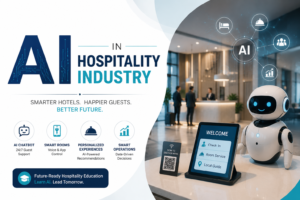
AI in Hotel Management Education
Hospitality education is changing rapidly because of the growth of AI in Hospitality Industry.
Modern hotel management students must learn both hospitality operations and technology-based hospitality systems.
Why Students Need AI Skills
Students entering the hospitality sector need AI skills because hotels now depend heavily on digital systems.
Students should understand:
- Hotel automation software
- AI customer engagement
- Smart hotel operations
- Hospitality data analytics
- Online hospitality systems
Learning these skills improves career opportunities in the AI in Hospitality Industry.
AI-Based Hotel Operations
Hotels use AI for:
- Revenue forecasting
- Inventory management
- Staff scheduling
- Customer analytics
- Online reputation management
Students who understand AI-based hotel operations gain a strong competitive advantage.
Digital Hospitality Learning
Modern hospitality education focuses on practical learning combined with technology training.
This includes:
- Hotel software systems
- Smart hotel simulations
- Digital reservation platforms
- AI customer service systems
Hotel Management Courses with AI
The demand for Hotel Management Courses with AI is increasing rapidly because the AI in Hospitality Industry is creating new career opportunities.
Students now prefer hospitality institutes that provide future-focused hospitality education instead of traditional outdated learning systems.
Future of Hospitality Industry in 2026
The Future of Hospitality Industry will be strongly influenced by the growth of AI in Hospitality Industry.
Hotels worldwide are investing heavily in automation, robotics, smart systems, and AI technologies.
Automation in Hotels
Automation is becoming one of the biggest trends in the AI in Hospitality Industry.
Hotels are automating:
- Reservation systems
- Billing operations
- Guest communication
- Housekeeping management
- Feedback collection
Automation improves efficiency and reduces operational costs.
Robotics in Hotels
Some hotels now use robots for:
- Food delivery
- Room service
- Cleaning operations
- Guest assistance
Robotics is becoming an exciting innovation in the AI in Hospitality Industry.
Data-Driven Guest Experience
Hotels use customer data to provide highly personalized experiences.
AI systems analyze:
- Booking behavior
- Spending habits
- Guest preferences
- Customer feedback
This improves guest satisfaction and customer loyalty.
AI-Powered Marketing
AI marketing tools help hotels improve:
- Social media campaigns
- Personalized advertising
- Email marketing
- Customer targeting
AI-powered marketing is becoming essential for modern hospitality businesses.
Smart Hospitality Systems
Future hotels will rely on integrated smart systems combining:
- Artificial intelligence
- IoT technology
- Cloud systems
- Automation tools
- Real-time analytics
These innovations are shaping the Hospitality Industry Trends 2026.
Benefits of Artificial Intelligence in Hospitality
The growth of AI in Hospitality Industry provides several advantages for hotels, guests, and hospitality professionals.
Benefits for Hotels
- Better operational efficiency
- Reduced costs
- Faster customer service
- Improved revenue management
- Better guest satisfaction
Benefits for Guests
- Personalized experiences
- Smart room technology
- Faster hotel services
- Contactless convenience
- Better security
Benefits for Hotel Staff
- Reduced repetitive work
- Better communication systems
- Improved productivity
- Easier workflow management
Benefits for Students
- Future-ready hospitality skills
- Better career opportunities
- Global hospitality exposure
- Technology-based learning
Benefits for Hotel Managers
- Better decision-making
- Data-driven operations
- Improved customer insights
- Smart hotel management
Challenges of AI in Hospitality Industry
Despite many benefits, the AI in Hospitality Industry also faces some challenges.
Human Touch vs Automation
Hospitality depends on emotional connection and personal interaction.
Too much automation may reduce the human touch guests expect from hotels.
Data Privacy Concerns
Hotels collect large amounts of customer data.
Protecting guest information and maintaining cybersecurity is extremely important.
High Technology Costs
Implementing advanced AI systems can be expensive for small and medium hotels.
Staff Training Challenges
Hotel employees need proper training to operate AI systems effectively.
Without training, technology adoption becomes difficult.
Why Students Should Learn AI in Hotel Management
Learning about AI in Hospitality Industry is becoming highly important for hospitality students.
Better Career Opportunities
Hotels now prefer candidates who understand:
- Smart hotel operations
- Hospitality software
- AI customer service
- Digital hotel systems
Higher Salary Potential
Technology-focused hospitality professionals often receive better salary packages.
Future-Proof Hospitality Skills
The growth of AI in Hospitality Industry means future hotels will depend heavily on technology.
Students with AI knowledge will remain more competitive in the job market.
International Career Exposure
Global hotel brands are investing heavily in AI technology.
Students with AI-based hospitality skills can explore international opportunities more easily.
AI-Powered Hotel Careers
Future careers related to the AI in Hospitality Industry may include:
- Smart hotel manager
- Hospitality technology consultant
- AI guest experience specialist
- Hospitality data analyst
- Digital hospitality strategist
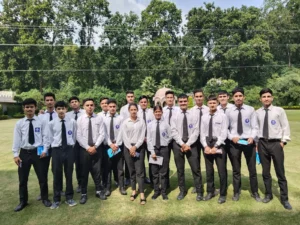
Why Choose Ausskill International Hotel School?
Ausskill International Hotel School focuses on modern hospitality education and future-ready career development.
AI-Integrated Hospitality Learning
The institute understands the growing importance of AI in Hospitality Industry and focuses on modern hospitality learning approaches.
Industry-Oriented Education
Students receive practical exposure in:
- Hotel operations
- Culinary training
- Hospitality communication
- Guest service management
Future-Focused Curriculum
The hospitality industry is changing rapidly, and students need future-oriented education to succeed in modern hotels.
Practical Hospitality Exposure
Hands-on learning helps students build confidence and industry experience before entering professional hospitality careers.
AI Adoption Statistics & Hospitality Trends
Global hospitality reports show that the AI in Hospitality Industry is growing rapidly.
Important trends include:
- Smart hotel investments are increasing worldwide
- AI-powered guest experiences are becoming standard
- Hotels are adopting automation faster than ever
- Contactless services are growing globally
- Personalized hospitality is driving customer loyalty
Experts believe the AI in Hospitality Industry will continue expanding throughout 2026 and beyond.
FAQs
1. What is AI in Hospitality Industry?
AI in Hospitality Industry refers to the use of artificial intelligence technologies in hotels and hospitality businesses to improve customer service, automation, and guest experiences.
2. How is AI used in hotels?
Hotels use AI for chatbots, smart rooms, personalized services, contactless check-ins, customer support, and hotel automation systems.
3. What are smart hotels?
Smart hotels use AI, automation, IoT devices, and digital systems to improve hotel operations and guest convenience.
4. Is AI the future of hotel management?
Yes, the future of hotel management will depend heavily on smart technologies and AI-powered hospitality systems.
5. Which hotel management course is best for future careers?
Hotel management courses that include AI learning, practical exposure, and modern hospitality technology are considered best for future hospitality careers.
Conclusion
The rise of AI in Hospitality Industry is transforming hotels, tourism businesses, and hospitality careers across the world. Smart hotels, automation systems, AI customer service, and personalized guest experiences are shaping the future of hospitality.
Students planning careers in hotel management must understand modern hospitality technologies to stay competitive in the future hospitality industry.
The demand for hospitality professionals with AI knowledge will continue growing because hotels are becoming smarter, faster, and more technology-driven.
Institutes like Ausskill International Hotel School are helping students prepare for the future by offering modern hospitality education and industry-focused learning approaches.
If you want to build a successful career in smart hospitality and the future hotel industry, learning about the AI in Hospitality Industry is the perfect first step.